Exploring the realm of accessing home equity in Australia through a line of credit, this guide offers a comprehensive look at the process, benefits, and considerations involved. Dive in for an informative journey that sheds light on this financial strategy.
Introduction to Home Equity and Line of Credit in Australia
Home equity refers to the value of your home that you truly own, calculated by subtracting the outstanding mortgage balance from the current market value of your property. On the other hand, a line of credit is a flexible form of borrowing that allows you to access funds as needed, up to a certain limit, using your home equity as collateral.
Accessing Home Equity through a Line of Credit
When you apply for a line of credit, the lender will assess the value of your home and the amount of equity you have. Based on this evaluation, you may be approved for a credit limit that you can draw from whenever you require funds. The interest is only charged on the amount you use, making it a convenient option for accessing funds when needed.
Benefits of Using Home Equity for a Line of Credit
- Flexibility: A line of credit offers flexibility in borrowing, allowing you to access funds whenever necessary without the need for a lump sum loan.
- Lower Interest Rates: Home equity lines of credit typically have lower interest rates compared to other forms of borrowing, making it a cost-effective option.
- Tax Deductible Interest: In Australia, the interest paid on funds borrowed through a line of credit using home equity may be tax-deductible, providing potential financial benefits.
- Use of Funds: The funds accessed through a line of credit can be used for various purposes, such as home renovations, investments, or unforeseen expenses.
Understanding the Process of Accessing Home Equity
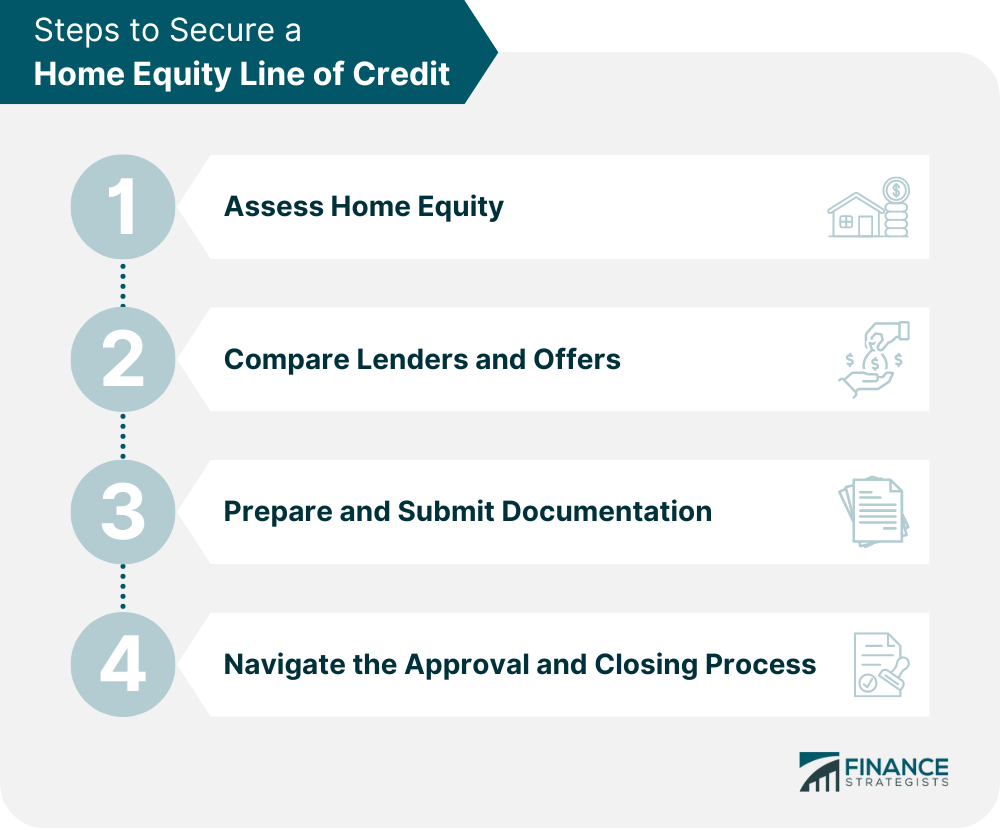
Accessing home equity in Australia involves a series of steps to unlock the value of your property. Let's explore the process in detail.
Eligibility Criteria for Obtaining a Line of Credit Using Home Equity
Before applying for a line of credit using your home equity, you must meet certain eligibility criteria. These may include:
- Having a sufficient amount of equity in your property
- Demonstrating a stable income and financial stability
- Maintaining a good credit score
- Meeting the lender's specific requirements
Documentation Required for the Application Process
When applying for a line of credit using your home equity, you will need to provide specific documentation to support your application. These may include:
- Proof of identity (such as a driver's license or passport)
- Evidence of income (such as pay stubs or tax returns)
- Property valuation documents
- Mortgage statements
- Details of any existing debts or liabilities
Comparing Home Equity Loans and Lines of Credit
When it comes to accessing the equity in your home, you have two main options: home equity loans and lines of credit. Both of these financial products allow you to tap into the value of your home, but they work in different ways and have distinct pros and cons.Home Equity Loans
Home equity loans, also known as second mortgages, provide a lump sum of money upfront that is repaid over a set term with a fixed interest rate. This can be a good option if you need a large amount of money for a specific purpose, such as a home renovation or debt consolidation.
- Pros:
- Stable monthly payments
- Predictable interest rates
- Suitable for one-time expenses
- Cons:
- Borrower receives the full amount at once
- Interest accrues on the entire loan balance
- May have higher closing costs
Lines of Credit
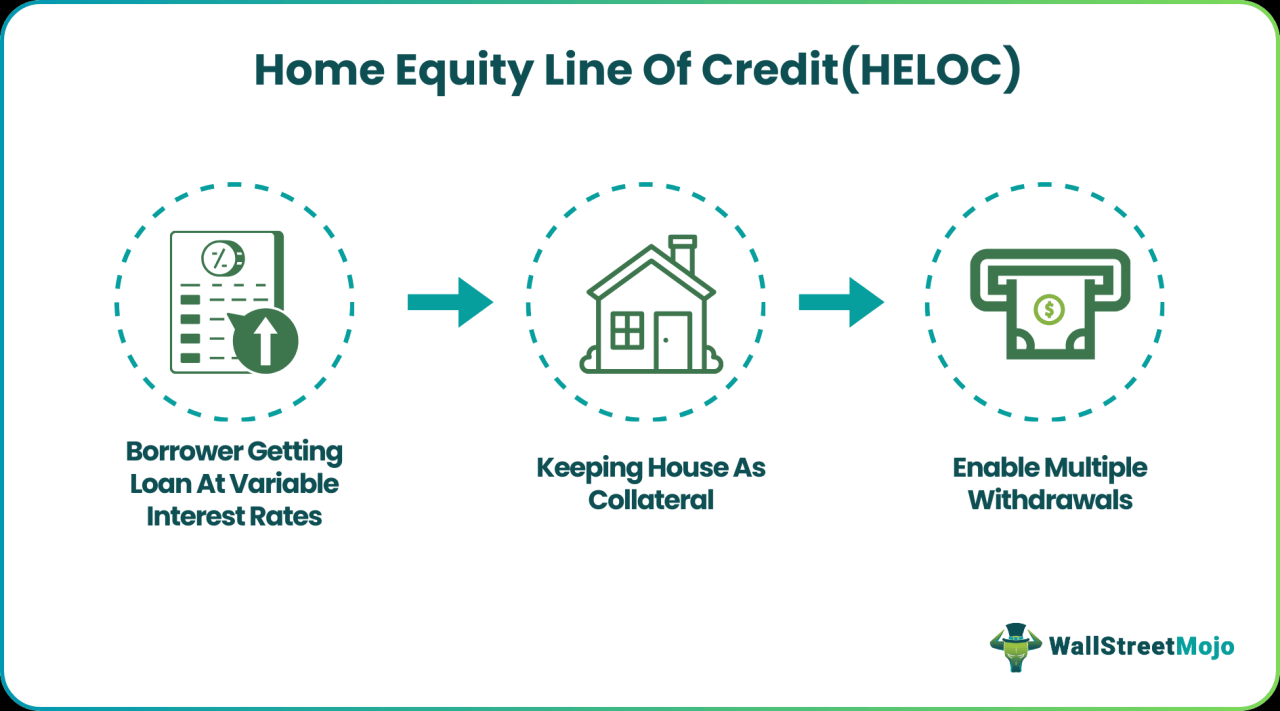
A home equity line of credit (HELOC) works more like a credit card, allowing you to access funds as needed, up to a predetermined credit limit. This can be beneficial for ongoing expenses or projects with unpredictable costs.
- Pros:
- Flexibility to borrow as needed
- Interest is only charged on the amount borrowed
- Revolving credit line for multiple uses
- Cons:
- Variable interest rates
- Potential for higher rates over time
- Less predictability in payments
For example, if you are embarking on a home improvement project with costs that may vary over time, a line of credit could be more suitable as it provides flexibility in accessing funds as needed. On the other hand, if you have a specific renovation budget and prefer the stability of fixed monthly payments, a home equity loan might be the better choice.
Managing and Repaying a Line of Credit
 When it comes to managing a line of credit, responsible financial behavior is key to avoid potential pitfalls. Understanding the repayment terms and options available for a line of credit is crucial to stay on track with your finances and maintain a good credit standing.
Tips for Managing a Line of Credit Responsibly
- Monitor your spending: Keep track of how much you are borrowing and ensure that you are using the funds for essential expenses or investments.
- Make timely payments: Always make at least the minimum payment on time to avoid late fees and negative impacts on your credit score.
- Avoid maxing out your credit limit: Utilize your line of credit wisely and avoid borrowing more than you can afford to repay.
- Regularly review your statements: Check your statements for any errors or unauthorized charges to address them promptly.
Repayment Terms and Options for a Line of Credit
Repayment terms for a line of credit typically involve making monthly payments based on the outstanding balance and interest accrued. You have the flexibility to repay the borrowed amount in full or make minimum payments, with the option to borrow again up to your credit limit.
Consequences of Defaulting on a Line of Credit
- Damage to credit score: Failing to make payments on time can significantly impact your credit score and make it challenging to access credit in the future.
- Accrual of fees and interest: Defaulting on a line of credit can lead to additional fees, penalties, and increased interest rates, making it even harder to repay the debt.
- Potential legal action: In severe cases of default, creditors may pursue legal action to recover the outstanding debt, resulting in court judgments or wage garnishment.
Ultimate Conclusion
Concluding our exploration of accessing home equity in Australia through a line of credit, we hope this guide has provided valuable insights and guidance for making informed financial decisions. Take charge of your equity and explore the possibilities that await.
Essential Questionnaire
How can I determine if I qualify for a line of credit using home equity?
To qualify, lenders typically look at factors like credit score, income, existing debts, and the amount of equity in your home.
What are the risks associated with defaulting on a line of credit?
Defaulting on a line of credit can lead to foreclosure on your home, damage to your credit score, and legal action by the lender.
How is a line of credit different from a home equity loan?
A line of credit allows you to borrow funds as needed, while a home equity loan provides a lump sum upfront with a fixed interest rate.